

Roseto Valfortore: one of Italy's most beautiful villages and an Orange Flag recipient
The origins of Roseto Valfortore
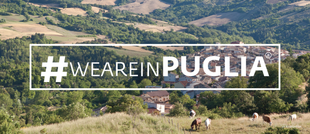
Roseto Valfortore, known as the town of stonemasons for its historic mastery of stone carving, dominates the western slopes of the Daunia Apennines and is a charming stop among the Apulian villages of Foggia. Nestled on a gently sloping plateau approximately 650 meters above sea level, in the upper valley of the Fortore River, from which "Valfortore" takes its name, it tells a story intertwined with nature: the ancient "Rosito" seems to recall the abundance of wild roses that adorn the area, offering glimpses of rare beauty.
The rose, a symbol of the town's identity, is also present in the municipal coat of arms, with the five-petalled "rosa caninis," an emblem of purity and harmony. The same iconography recurs in a precious 16th-century stone panel on the entrance balustrade of the Mother Church, a true testament to the art of Roseto's stonemasons: a work linked to the period of feudal lord Bartolomeo III Di Capua, in which the dog rose accompanies the name of the town, spelled out in three syllables, RO-SI-TO, as a tribute to local memory and culture.
History, culture, and nature: an enchanting journey
The history of Roseto Valfortore is deeply rooted in an ancient and glorious past, as evidenced by archaeological finds in the area. A funerary stone inscribed in Latin, several coins, and various everyday objects are just some of the finds that attest to human presence and the strategic importance of this area as far back as the Punic Wars. These findings offer a fascinating glimpse into the lives of Roseto's ancient inhabitants, demonstrating how the community has been a crossroads of cultures and traditions throughout the centuries.
The unique combination of history, culture, and nature makes Roseto Valfortore a pearl of the Daunia Apennines, a place where time seems to have stood still to preserve the beauty and authenticity of a town that continues to live according to its ancient traditions, proud of its rich past and the art of its stonemasons, true custodians of a knowledge passed down from generation to generation.
The historic turning point of Roseto
Roseto's great historical transformation began in 1294: for 271 years, the fiefdom was ruled by the Di Capua family, tasked with rebuilding the ancient Casale. Bartolomeo III deserves credit for giving the town its proper structure, bringing it to its greatest splendor. Roseto's history is perfectly represented by its Mother Church, so dear to the people of Roseto, which has undergone various transformations over time. The sacred building stands at the mouth of the town's main gate (the Arco della Terra), where the ancient square (the "Piazza Vecchia") begins, parallel to the Palazzo del Marchese, which was restored and expanded during the same period. It dominates the valley to the east and, with its austere bulk, seems to watch over the narrow streets and small houses that slope down the "Sottosanti district," which constituted the original inhabited center of Roseto, built according to the Lombard construction technique. It was during the Angevin period that the Mother Church assumed its current title of "Maria Santissima Assunta In Cielo", a title that has remained unchanged over the centuries to this day.
Curiosity
Roseto boasts a twin in Pennsylvania, built by the first Roseto emigrants in the late 19th century. These pioneers, leaving Italy in search of a better life, brought with them the culture and traditions of Roseto, creating a unique community that still reflects the Italian roots of those courageous emigrants.